


October 9, 2026 – 28 Tishri 5787
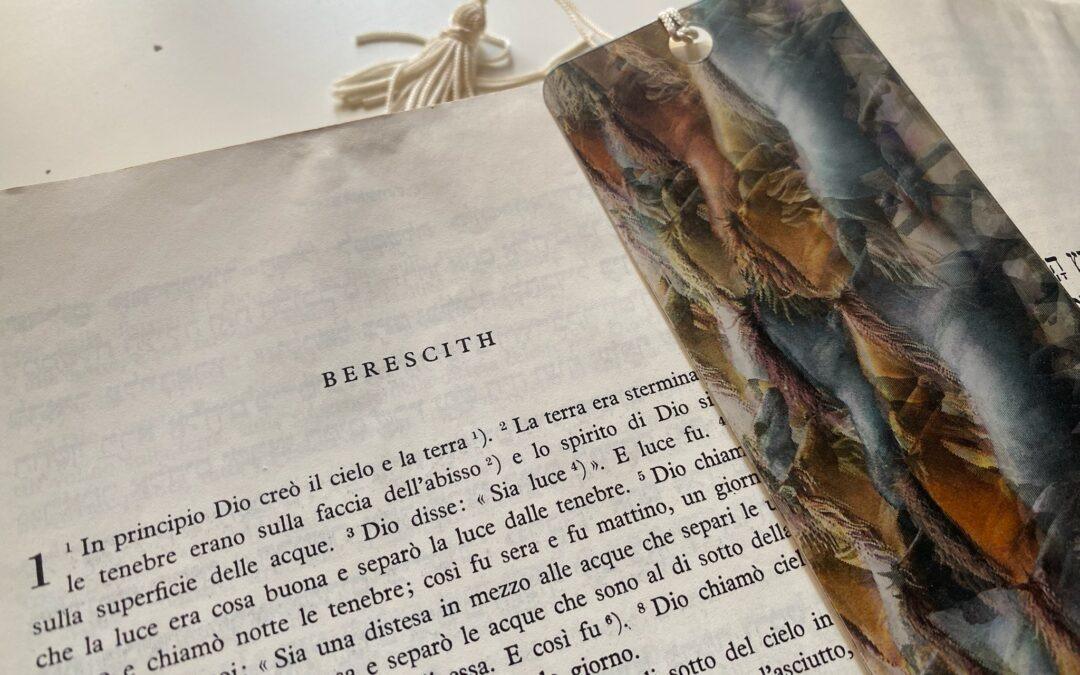
PARSHAT BEREISHIT
Today is a new beginning Lior, a rebirth in the realms of body and spirituality and human relationships. As in the first chapter of the Torah, your personal universe is being born, with order slowly emerging from chaos.
In Bereshit chapter 1, God is described as Elokim, which for the Sages refers to Divine justice. It is a collective name, it represents "the force of forces"; Elokim is the God we encounter in Nature, in the vastness and complexity of creation. A common noun indicates a category, a group of things united by common characteristics. Indicates substitutability, objects defined by their functions. A proper name is different: it refers to an individual in his or her individuality. Ethically, no person is replaceable with another. The Sages teach: "When a human being creates many coins of the same mintage, they are all the same. ...God creates every human being in the same image, His image, and they are all different."
Your chaos Luli has been beautiful and terrible.
In chapters 2 and 3, God is called Hashem-Elokim. In chapter 4 God for the first time is called Hashem alone.
Hashem, by contrast, is not a noun but a name. It refers to God not as a power, or a totality of powers, but as a person, as “Thou.” Hashem is the One who speaks to us and to whom we speak, who loves us as a person loves, who hears our prayers, forgives our failures, gives us strength in hard times, and teaches us the path of life. Judah Halevi said that the difference between Elokim and Hashem is the difference between the God of Aristotle and the God of Abraham.
Hashem is God as we encounter Them not in creation but in revelation.
Something changes during these chapters: not God (who does not change) but the perception that humans have of God.
Lior, in your first chapters you arrived here safe and sound, as part of Nature. You lived first-hand (literally) how it is true that we share so much of our DNA with other life forms. Elokim is the author of nature.
In chapters 2 and 3 man begins to use language. God presents the various forms of life to man "to see what he would name them, and whatever the man called each living thing, that would be its name." So far, Adam only uses nouns, both for animals and for his wife, whom he calls “ishah,” “woman.” He has moved from nature to culture (of which language is the first step), but he has not yet understood the concept of a person. Only when Adam gives his wife a proper name, Eve, will the Torah use only the name Hashem. After Adam becomes aware of his wife as a person he can understand God as a person.
When you gave yourself your name, Lior, you began this journey, well, in your own way. You already use to call the very important people in your life by their "proper name", however your relationship with God was not yet integrated into those personal relationships. Maybe you didn't call yourself by your "proper name".
Judaism was much more than the discovery of monotheism. This idea is within the word Elokim. It was also the discovery that God is a person – that the fact that we are persons, with loves, fears, hopes and dreams is not an accidental result of evolution but is a reflection of the ultimate reality of the cosmos. We are not gene-generating robots but persons, each of us unique, irreplaceable, we are here because God wanted us to be. This is the revolutionary concept of Hashem, and it was only when Adam responded to Eve as a person that he could respond to God as a person.
This is why the commandments (mitzvot) between us and God are inseparable from those between us and other human beings. Maybe you exaggerated a little, Lior. Perhaps precisely because of the importance of your relationship with Hashem, you have given too much importance to the "name" of your human travel companions, overshadowing your own name.
“Betzelem Elohim” In the image of God.
Verse 1:27 “God created the human being in His image, in the image of God He created man”. This verse intrigues me a lot: because if we consider the Torah as written by God, or rather dictated by God to Moses, (in the traditional orthodox way as opposed to the progressive belief that the 5 books of the Torah are a text composed of various texts written by different subjects) the first part is obviously the active text, where God tells what he has done; the second sentence is strange, it sounds to me as if God was saying that he created the human being in the image of God, as if God had been inspired by God.
Not because God has a human form or appearance, no no, but because every human being has a unique value, a dignity that does not depend on money, social position, culture or abilities. The rules of justice, mercy, compassion, charity, respect for the poor, love for the neighbor and the stranger, delicacy of language and sensitivity, are all variants of the respect for the other as an image of the Divine other.
The way we treat the other person gives the measure of the way we value human life: it is easy to treat with respect those who look like us, those who think like us, those who "serve" us.
Humiliating, despising or ignoring a person means forgetting the value they carry within themselves, whereas respecting others, listening to them and treating them with dignity means recognizing that "Tzelem Elohim".
L’hitraot, see you!
Luli