

As I mentioned in my previous article, I got to this festival of Purim, which is also embracing Shabbat, specifically parshat Tetzaveh, quite prepared. Not only for the Hamantaschen stuffed with the traditional paste called Mohn, but also for the mitzvah of my weekly challah.
My beloved Ariel has definitely Ashkenazi origins, while I feel attracted, in many ways, to the Sephardic Jewish lifestyle, even though, living in Italy, it is obvious (!) how Italian Jews - Italkim - have a tradition of their own.
This week's parasha highlights the value of beauty, the importance of finding one's own, adequate, "holy" attire and its influence on our interiority. But to further explore this concept, here is the very welcomeThought for the Week, Shabbat Tetzaveh 5781, by Rav Ariel J Friedlanderfrom "In the Beginning ..".
The Torah speaks to us of making our service to God more holy through the beauty of sacred garments: I believe that just as we can translate this concept into our ritual accessories for prayer, so can the choice of what we wear every day be a dedication to our deepest, most sacred personal essence.
With the same intention extended also to the kitchen, I felt inspired to mark this parshà - which is so meaningful to my area of interest and values - and the festival of Purim, with a little research to make our Shabbat table more beautiful, with a tribute both to the Eastern European tradition and to the Sephardic one. 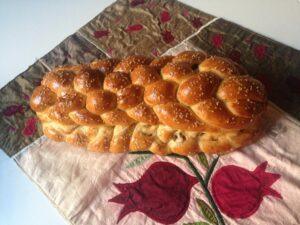
Here is the product of my first experience in making the Keylitsh challah: this is a large, elaborately braided Eastern European challah, traditionally served at weddings and Purim feasts. A custom that originated in Poland: sometimes with lit candles into it, it was offered by a woman dancing before the bride and groom, as a wish that they might always have bread. Moreover, being made of 12 threads of equal thickness and length, it is meant to represent the 12 tribes of Israel. And at Purim, the extensive braiding is meant to recall the rope used to hang Haman - boooo!
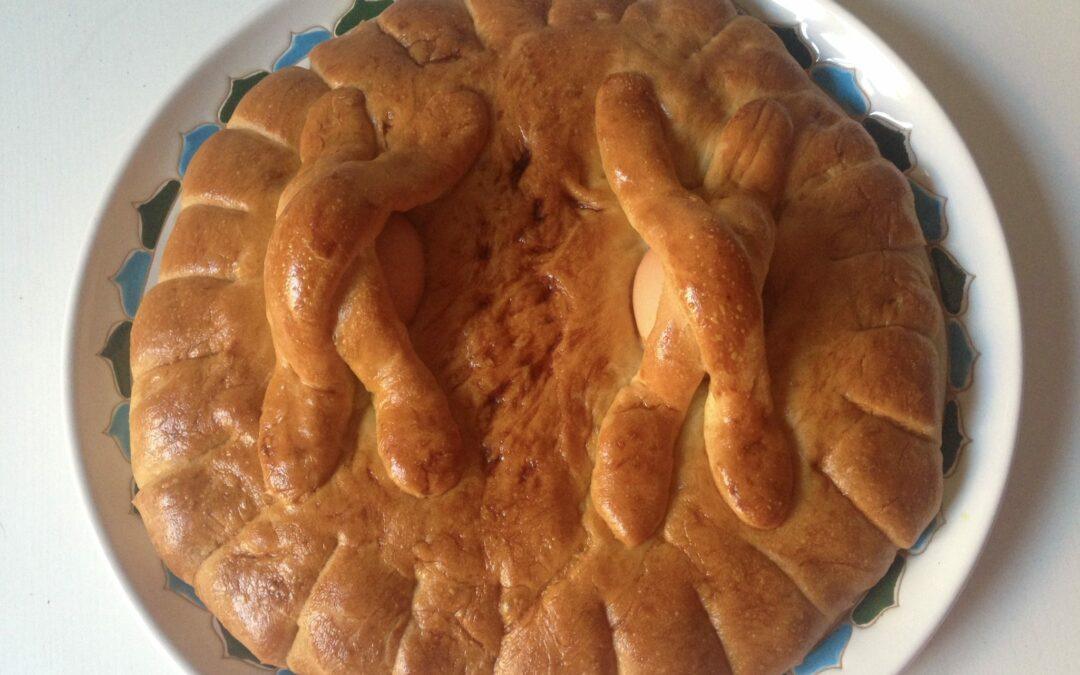
In this other experiment, a traditional Moroccan bread named Boyoja Ungola, or Ojos de Haman – booooo! – I really enjoyed placing two hard-boiled eggs as Haman's - booooo! - eyes and smothering them with two big X!!!! Cathartic, right?!
Chag Purim Sameach! Happy Purim!